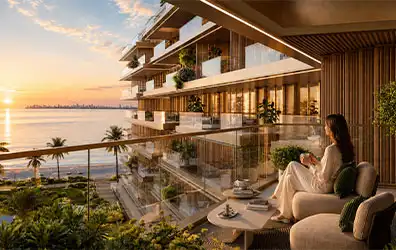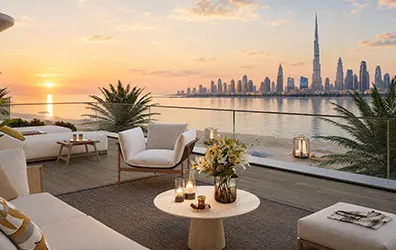
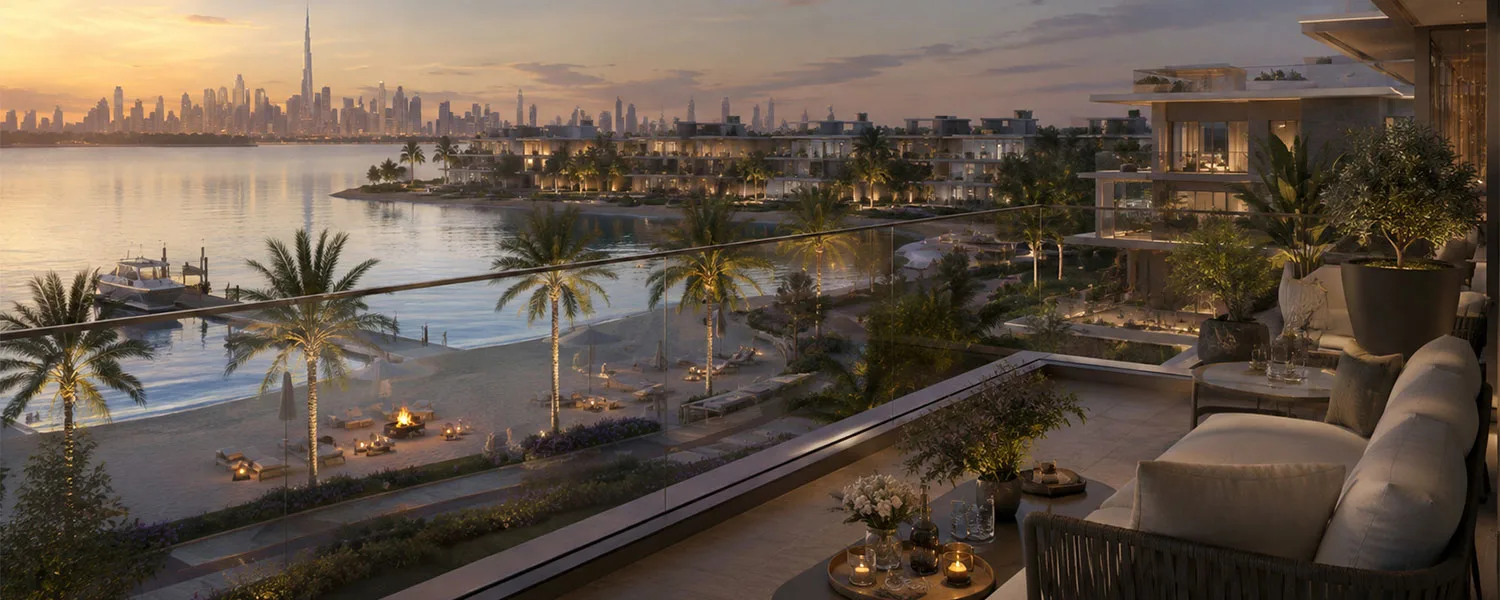
Luxury real estate Dubai is no longer defined by price alone. The strongest homes combine location, scarcity, thoughtful design, privacy and a level of everyday comfort that remains relevant long after launch. For buyers, that means looking beyond polished renders and asking whether the asset has the fundamentals to hold attention — and value — over time.
This guide explains how to compare Dubai luxury property by location, property type, design quality and investment logic, while keeping the decision grounded in practical questions rather than labels.
Quick answer: The best luxury property in Dubai is not simply the most expensive. Look for a location with durable demand, a genuinely differentiated home, efficient layouts, controlled density, strong management and a credible developer. Those factors matter whether you are buying to live, invest, or combine both goals. |
Dubai’s high-end market entered 2026 with strong demand for quality residential assets. Dubai Land Department reported that luxury real estate investments reached AED 87.71 billion in Q1 2026, up 26% year on year. Foreign real estate investment also reached AED 148.35 billion in the quarter, reinforcing the depth of international participation in the wider market.
For buyers, the important point is not that every high-priced home will perform equally. As supply expands, the difference between a genuinely scarce, well-planned asset and a generic premium apartment becomes more important. That is why AVENEW approaches luxury as a combination of design quality, location-backed value and refined comfort rather than a price category.
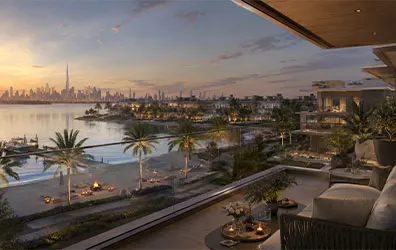
Luxury property should create a clear advantage that is difficult to reproduce. That advantage may come from direct waterfront positioning, low residential density, generous private outdoor space, architecture with a distinct identity, or a service model that meaningfully improves daily living.
For a deeper breakdown of specifications, density and architectural quality, see what defines true luxury property development in Dubai. The key distinction is simple: premium finishes can be added to many buildings; genuine scarcity and thoughtful planning are harder to replicate.
Four signals of a stronger luxury asset
Signal | What it looks like | What the buyer should check |
Location | Waterfront, prime urban or carefully selected growth location | Connectivity, future supply and demand generators |
Scarcity | Limited residences, distinctive views or rare typology | Units per floor, competing supply and privacy |
Design | Natural light, efficient plans and usable outdoor space | Floor plan, orientation, materials and proportion |
Management | Consistent upkeep and service quality | Service model, running costs and long-term maintenance |
Dubai’s luxury market is not one product category. The right format depends on how you expect to use the home, the level of privacy you want and how important operational simplicity is to you.
Property type | Often suits | Key question before buying |
Luxury apartments | Buyers prioritising convenience and easier ownership | Does the building offer enough privacy, light and usable space? |
Villas | Families and buyers prioritising land and privacy | Is the location established enough to support long-term demand? |
Buyers seeking larger layouts, terraces and scarcity | Is the premium supported by view, privacy and genuinely rare space? | |
Owners who value hospitality-led service | What service is actually delivered, and what does it cost? | |
Buyers seeking quiet sophistication and fewer neighbours | How many residences share lifts, amenities and common areas? |
Waterfront buyers should also distinguish between a sea view and direct shore access. AVENEW’s guide to direct beachfront property in Dubai explains why access, view protection and coastline relationship matter. For buyers considering smaller residential collections, the guides to boutique apartments in Dubai and low-density apartments explore the value of fewer residences and a more private shared environment.
Dubai offers several luxury submarkets, and they should not be judged by the same criteria. Established addresses can offer mature amenities, proven resale activity and clearer price benchmarks. Emerging destinations can offer newer architecture, earlier positioning and a longer development runway, but they also require more attention to execution and future supply.
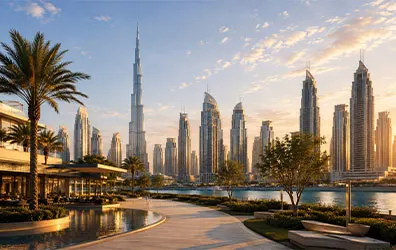
Palm Jumeirah, Jumeirah Bay Island, Downtown Dubai and the central business districts remain important reference points for buyers seeking established recognition, immediate amenities and a mature lifestyle proposition. The trade-off is usually a higher entry point and, in some areas, a wider mix of older and newer stock.
Communities such as Emirates Hills and Dubai Hills Estate appeal to buyers who prioritise larger plots, privacy, schools, green space and a more settled family environment. In this part of the market, the quality of the street, plot position and surrounding homes can matter as much as the interior specification.
Newer waterfront destinations can appeal to buyers who want contemporary design and longer-term location growth. Dubai Islands is one example: its coastal setting, new residential supply and hospitality-led planning create a different proposition from a fully mature prime district. The opportunity is not simply “newness”; it is whether the master plan, connectivity and product quality can build durable demand over time.
This is why location should be assessed as an investment fundamental, not a postcode. AVENEW’s guide to how developers choose the right location in Dubai explains the role of connectivity, infrastructure and future demand in long-term property decisions.
A luxury label should never replace due diligence. Before paying more for a home, compare the factors that influence both daily experience and future resale relevance.
Location depth — look beyond the immediate view to connectivity, surrounding land use and future supply.
Residential density — fewer units can support privacy, but only when common spaces, lifts and services are planned well.
Floor-plan efficiency — pay attention to wasted corridors, bedroom privacy, storage and furniture placement.
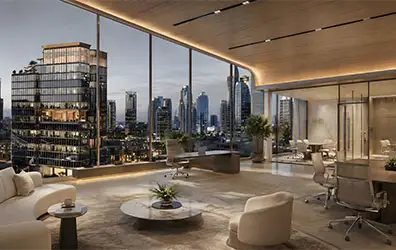
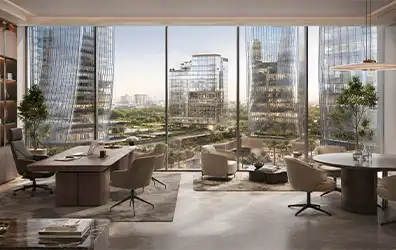
Natural light and orientation — large windows are valuable when the orientation supports comfort, usable views and sensible heat exposure.
Indoor-outdoor living — terraces should be deep enough to use, not simply added to a brochure plan.
Amenity quality — a smaller set of well-run spaces can add more value than a long list of facilities with limited everyday use.
Management and ownership costs — service quality matters, but so do recurring costs and maintenance discipline.
Developer credibility — study delivery, transparency and the logic behind the project, not only the launch campaign.
For more detail on layout, light and material choices, read Design-Led Homes in Dubai. For the developer side of the decision, see what smart investors check before choosing a property developer in Dubai.
Off-plan luxury property can offer access to the newest design concepts, staged payment plans and emerging destinations. It also asks the buyer to evaluate a future asset before it is complete, making the developer, specification, contract and delivery framework especially important.
Ready property offers something different: the ability to inspect the home, understand the completed community and assess real ownership costs before committing. Neither route is automatically better. AVENEW’s off-plan vs ready property guide compares the two paths, while the complete guide to buying off-plan property in Dubai explains the purchase process in more detail.
It can be — but “luxury” is not an investment thesis on its own. A strong asset still needs a realistic entry price, durable end-user demand, limited direct competition, appropriate ownership costs and a clear reason for a future buyer to prefer it.
Investors should also separate lifestyle value from financial return. A home can be exceptional to live in without being the most liquid asset in a portfolio. Conversely, a well-located residence with broader buyer appeal may offer a more balanced resale path. The right choice depends on holding period, use case and risk tolerance.
For a broader framework, see Investing in Dubai: benefits and property considerations and how smart investors reduce risk when buying off-plan property.
AVENEW’s coastal projects show how different luxury concepts can sit within the same destination. The point is not to treat every project as interchangeable, but to understand which design principle matters most to the buyer.
AVENEW project | Design emphasis | Best considered by buyers who value |
Seafront architecture, natural materials, expansive openings and sky-villa living | Design expression, sea connection and larger-format residences | |
64-residence beachfront collection with direct shore access and expansive terraces | Low density, direct beachfront living and privacy | |
Boutique 1–3 bedroom collection with sea and marina views | Practical boutique scale, coastal views and contemporary layouts | |
Serviced hotel residences shaped around space, light and nature | Service-led living and a refined hospitality experience |
The wider principle is consistent with AVENEW’s approach to residential communities designed for long-term value: a home should work emotionally in daily life while still making sense as an enduring asset.
Can I explain why this location should remain desirable in five to ten years?
Is the home genuinely scarce, or simply expensive?
Does the floor plan work when furnished?
Are the balcony, terrace and views genuinely usable?
How many residences share the lifts and amenities?
What are the expected service and maintenance costs?
What competing supply is planned nearby?
Does the developer provide clear specifications and delivery information?
Would I still choose this asset if the launch incentives disappeared?
Luxury real estate in Dubai generally combines a strong location with scarcity, design quality, privacy, generous space, considered amenities and high standards of management. Price matters, but it does not define luxury by itself.
Established luxury addresses include Palm Jumeirah, Jumeirah Bay Island, Downtown Dubai, Emirates Hills and Dubai Hills Estate. Emerging coastal destinations such as Dubai Islands offer a newer proposition built around contemporary waterfront development.
Yes, when the project has a credible developer, clear specification, appropriate pricing and a location with durable demand. Buyers should also understand payment terms, delivery risk and competing future supply before committing.
It depends on the buyer. Apartments often offer easier day-to-day ownership and stronger access to central or waterfront destinations. Villas usually prioritise privacy, land and family space. The better choice is the one aligned with your intended use and holding period.
Dubai Islands is an emerging coastal destination with new beachfront residences, hospitality and leisure components. Buyers should evaluate each project individually, including its exact position, density, design, access and future surrounding supply.
There is no single factor, but location quality and asset differentiation are difficult to replace later. A strong purchase combines location, design, developer execution and a clear reason for future buyers or residents to continue valuing the home.
Dubai offers an increasingly varied luxury residential market, from established prime neighbourhoods to new coastal communities. That breadth gives buyers more choice, but it also makes comparison more important.
The strongest decision is rarely the loudest launch or the highest specification list. It is the home where location, design, privacy, comfort and long-term demand reinforce one another. That is the foundation of enduring asset value — and the principle AVENEW brings to design-led living in Dubai.
Market reference
Dubai Land Department — Dubai real estate transactions and luxury investment, Q1 2026