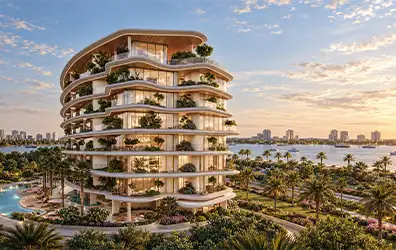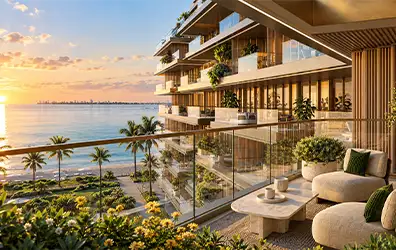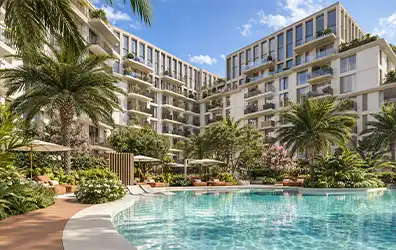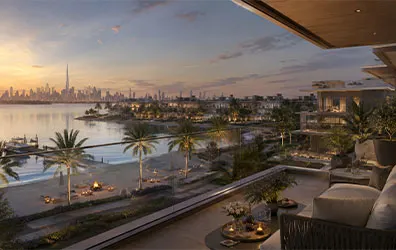
Choosing among the best areas to buy property in Dubai is less about finding one universal winner and more about matching a location to how you plan to live, what type of home you want and how long you expect to hold it. Dubai combines mature urban districts, established waterfront communities, family-focused master plans and newer locations still building out their infrastructure and identity.
For buyers, the strongest location decision starts with context. Current Dubai property prices help establish the entry point, while the Dubai real estate market provides the wider picture on demand, supply and transaction activity. This guide focuses on the question in between: which area best fits the buyer?
There is no single best area to buy property in Dubai. Downtown Dubai suits buyers who want central urban living; Dubai Marina offers an established waterfront environment; Dubai Hills Estate is a strong fit for buyers prioritising family-oriented master planning; Jumeirah Village Circle offers broader mid-market choice; Palm Jumeirah sits at the prime waterfront end of the market; and Dubai Islands and Dubai South suit buyers considering newer locations with longer development horizons. The right choice depends on lifestyle, property type, price position, community maturity and future supply—not the area name alone.
Area | Best for | Market character | Main trade-off |
|---|---|---|---|
Downtown Dubai | Central urban living | Established prime | High entry price and apartment-heavy stock |
Dubai Marina | Waterfront apartment lifestyle | Established waterfront | Density and building quality vary |
Dubai Hills Estate | Family-oriented living | Master-planned | Premium pricing in mature sub-communities |
Jumeirah Village Circle | Broader mid-market choice | High-volume residential | Large competing supply |
Business Bay | Central mixed-use living | Urban mixed-use | Building and micro-location differences matter |
Dubai Islands | Emerging coastal living | Developing waterfront | Longer maturity horizon |
Dubai South | Infrastructure-led growth | Emerging master area | Future demand depends on continued build-out |
Palm Jumeirah | Prime waterfront ownership | Ultra-prime | Very high entry and ownership costs |
The areas below are not ranked from first to last. They represent different parts of Dubai’s residential market. A buyer looking for a mature waterfront apartment will make a different choice from a family prioritising parks and schools or a buyer willing to wait for an emerging location to mature. Dubai Land Department open data allows buyers to compare transactions, rents, property types and areas rather than relying only on asking prices or marketing claims.
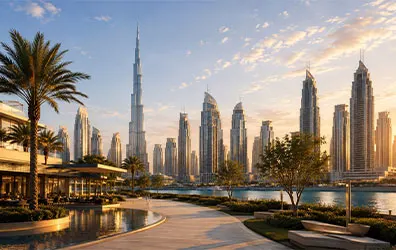
Downtown Dubai remains one of the clearest choices for buyers who want a central address, high-rise living and direct access to hospitality, retail and major city landmarks. The market is established, which gives buyers more completed stock and a longer transaction history to review. The trade-off is that entry prices are typically premium, so unit quality, orientation, building management and service costs deserve close attention.
Dubai Marina offers a mature waterfront setting with a large apartment market, walkable public realm and established daily amenities. It can suit buyers who want an active neighbourhood without depending on a future master plan to deliver the lifestyle promise. The main caution is variation: two buildings within the same area can differ materially in age, layout efficiency, density and upkeep. Buyers comparing waterfront options can also read AVENEW’s guide to direct beachfront property in Dubai.
Dubai Hills Estate combines apartments, villas, parks, retail and community facilities within a large master-planned environment. It can suit families who value open space and a more residential rhythm while remaining connected to central Dubai. When comparing homes here, buyers should still assess the exact sub-community, property type and future supply rather than treating the entire area as one uniform market.
Jumeirah Village Circle offers a wide range of apartments and townhouses across different price points, which gives buyers substantial choice. That breadth is also the main reason to compare carefully: developer quality, building density, service levels and competing future supply can vary significantly. A lower entry price should be evaluated alongside the actual quality of the asset and its likely long-term appeal.
Business Bay suits buyers who want proximity to central Dubai while living in a mixed residential and commercial district. Its apartment stock spans very different buildings, specifications and views, so micro-location matters. Buyers should compare the exact tower, road access, walkability, surrounding development and management quality instead of assuming every Business Bay property offers the same experience.
Dubai Islands is a newer coastal destination where the residential proposition is being built around waterfront living, hospitality and new-generation homes. It may suit buyers willing to accept a longer maturity period in exchange for newer product and an emerging coastal environment. Because the destination is still developing, buyers should consider what is delivered today, what is confirmed for later and how future supply may shape the market. Dubai Islands guide explains the wider destination, while the beachfront property guide looks more closely at coastal scarcity and access.
Dubai South is shaped by aviation, logistics, business growth and large-scale infrastructure planning. It can suit buyers who prefer a longer-term location strategy rather than paying a premium for a mature central district. The area is continuing to add businesses, housing and mixed-use development, so buyers should assess proximity to employment, community amenities, handover timing and the pace of surrounding infrastructure. Dubai South investment and Dubai South development guides provide deeper context.
Palm Jumeirah sits at the prime end of Dubai’s residential market, with apartments, villas and branded residences shaped by waterfront scarcity and international recognition. It suits buyers whose priority is established prime positioning rather than accessible entry pricing. Purchase price is only part of the decision: property condition, service charges, management model, view protection and ongoing ownership costs can materially affect long-term value. luxury real estate guide explains how to assess high-value residential assets beyond the price tag.
Buyer goal | Areas to compare | Why |
|---|---|---|
Central city lifestyle | Downtown Dubai, Business Bay | Established urban access and apartment choice |
Waterfront living | Dubai Marina, Dubai Islands, Palm Jumeirah | Different levels of maturity, scarcity and entry price |
Family-oriented community | Dubai Hills Estate | Master-planned environment and open space |
Broader mid-market choice | JVC, Dubai South | More accessible options than prime central districts |
Emerging location | Dubai Islands, Dubai South | Longer-term development and infrastructure stories |
Prime residential positioning | Palm Jumeirah, Downtown Dubai | Established demand and high entry pricing |
Neither is automatically better. Established areas offer completed infrastructure, visible community quality and longer transaction histories. Emerging areas can offer newer product and earlier positioning, but they require greater attention to future supply, confirmed infrastructure and holding period.
The decision is easier when buyers understand how developers choose locations and compare that logic with current Dubai property prices rather than treating every new district as a guaranteed growth story.
Why do people live there? Look at employment, schools, leisure, waterfront access and daily convenience.
What property types dominate? Apartment-heavy districts behave differently from villa-led family communities.
How much new supply is coming? More choice can be positive, but it also increases competition between buildings.
Is the infrastructure delivered or only planned? Separate confirmed transport, retail and community facilities from future concepts.
How does the entry price compare with alternatives? Price per sq ft is useful only when property type, age, view and quality are comparable.
How mature is the area? A developing location may require a longer holding period than an established district.
Does the specific property make sense? Layout, orientation, density, developer execution and ownership costs still matter after the area is chosen.
For a deeper property-level check, compare top real estate developers in Dubai, the role of design-led homes and how low-density apartments can differ from higher-volume residential stock.
The answer depends on the objective. A buyer focused on rental income may prioritise a different area from someone seeking capital preservation, future growth or personal use. This article therefore avoids ranking areas by ROI. For investment-specific location comparisons, read Dubai Islands or Dubai South: Where Should You Invest Based on Your Goal? and AVENEW’s broader guide to investing in Dubai.
For an owner-occupier, the “best” area is often the one that makes daily life easier. Commute time, schools, walkability, green space, beach access, privacy, home size and building density may matter more than headline investment metrics. AVENEW’s guide to residential communities in Dubai explains why community design can influence long-term comfort and asset appeal.
Usually, the two decisions should be made together. A strong area cannot fully compensate for a poor floor plan, excessive density or weak building management. Equally, a well-designed home in a location with limited long-term demand may face its own constraints.
For off-plan buyers, location should be checked alongside the developer, payment structure and delivery timeline. AVENEW’s off-plan buying guide covers those steps in more detail.
Downtown Dubai, Dubai Marina, Dubai Hills Estate, JVC, Business Bay, Dubai Islands, Dubai South and Palm Jumeirah each suit different buyers. The best choice depends on lifestyle, property type, price position, community maturity and holding period.
For central urban living, Downtown Dubai and Business Bay are established options. Dubai Marina suits waterfront apartment buyers, JVC offers broader mid-market choice, and Dubai Islands is an emerging coastal alternative.
Master-planned communities with parks, schools, retail and larger homes are often better suited to families. Dubai Hills Estate is a prominent example, while other areas may suit families depending on commute and housing needs.
Dubai Marina and Palm Jumeirah are established waterfront markets, while Dubai Islands is an emerging coastal destination with newer residential supply.
Established areas provide visible infrastructure and longer transaction histories. Emerging areas may offer newer product and earlier positioning but require more patience and closer analysis of future supply and confirmed infrastructure.
Review current prices, transaction activity, future supply, infrastructure, property type, community maturity and the quality of the specific building or development. Area reputation alone is not enough.
The strongest property decisions in Dubai come from matching the location to the buyer—not from following a universal ranking. Established prime districts, family-focused master communities and emerging areas all serve different needs. Start with how you expect to use the property, compare the local market with current Dubai real estate conditions, and then evaluate the individual home on its own merits.